Book review: The blood debt

I followed reading the final book in the trilogy the day after reading the second book. Compared to the second one, the PoV shifts are not that numerous or sudden, but that is great part due to the story converging in two places: around Wulfric and around Rodulf.

Rodulf keeps his scheming and takes it to the next level, resulting to multitude of atrocious acts. Adalhaid is finishing her studies with plan to leave the city as soon as she finishes what Aethelman could not, knowing that she’d not be safe remaining around if she succeeded (and would probably not live long if she failed). She has some obstacles in the way, partially due to the headmistress having some aversion to Northlanders.

In the meantime, Wulfric returns from his journey overseas only to end up tangled in a messy webs of politics and traitors. And as it tends to be, he just can’t kill those, no matter how reasonable his suspicions are, without a proof his enemies are not willing to give.

He is lured away from the city on a quest to find a blade worthy of a hero, realizing it’s a trap but having no choice. He gets some insight and understanding on the way and just as he returns, the story seems to be getting to the finale… which it would be, if not for the narrative, as I mentioned in my review of the second book. It is here when it shows as trouble. When you know that some characters will survive, it kills the surprise.

I also though some characters maybe deserved a bit better end (no spoiler to who) and that the ending, shifted several years later, is quite anticlimactic. One would expect that after dealing with an uprising led by traitor, a monarch aiming for peace would do all in his power to have all the schemers, and especially the head, searched and dealt with at any cost, yet it is not the case here.

The good part was in the head Intelligencier (that’s how the inquisitor-like sect is called) who shows compassion for the sake of his family, realizing that despite what many would think not all magic is bad.


Read date: 11.-12.4.2018
Published: 2.10.2017
Goodreads / Amazon rating: 4,25 / 4,2
My rating: 80%
Length: 376 pages (kindle edition).

My final verdict for the book, and the whole series, is that it was great read that sucked me in, but could be much better if not for the spoiler-ish narration.

Also, I guess this will lead to me writing blog posts about some topics I wanted to cover: my thoughts about PoV/narration and my thoughts about what is (or not) good or satisfactory ending.

Book review: Jorundyr’s path

As I mentioned at the end of my review of “Wolf of the North“, I was tempted to get into the sequel right away, but for reasons delayed that. The story was captivating, so I blazed through the second book in two days, but it had its issues.


Given how the first book ended, with Wulfric at the run (both away from Leondorf and towards his revenge), Aethelman with is own goal, Rodulf scheming more and Adalhaid with her own choices to make, there were many sub-stories to follow.

That itself would not be an issue, but how the PoV shifts were handled was troublesome, often changing several times in a single chapter, something that might confuse some readers. Worst, these plot parts were happening at different places, detached enough that just following one character for a while would be enough – there was no hint that they happened at the same time to require these abrupt shifts (except when they converged, of course). Personally I’d guess they were supposed to build suspense but I did not feel it that way.

The book also showed why I don’t like books told in this kind of retrospective with shifts to the narrator retelling the story much later, for one reason: it is easy way to spoilers, which was the case in this book. As enjoyable as it was, since maybe half of the second book, it turned from “how it will end?” to “how it’ll get there”, which is quite a pity.


Read date: 9.-10.4.2018
Published: 30.5.2017
Goodreads / Amazon rating: 4,15 / 4,3
My rating: 80% (with mixed feelings, 70% of it is immersion)
Length: 368 pages (kindle edition).

Book review: The Wolf of the North

So, I finally got to another book that was on my TBR quite soon after I bought my e-reader… two years ago. Needless to say, I am glad I got to it. Another quick and very good read.

The Wolf of the North starts like underdog story with Wulfric being weak and bullied by older boys in the village and having pretty much only one friend in Adalhaid, girl from the same village. He’s quite the opposite of his father, the village’s best warriors who’s quite disappointed by it.
Eventually, Wulfric starts changing and eventually beats Rodulf, the ‘boss’ of his bully gang, to the point that Rodulf loses an eye and his hopes for becoming a great warrior are crushed forever. Probably very well deserved beating that changes both Wulfric and Rodulf.

Wulfric then starts his training while Rodulf and his father take different path, choosing to pursue wealth and political power instead of physical power and skill with blade.

The machinations of those two eventually start a downhill spiral (won’t spoil the details) and the growing greed of those two causes large amount of grief among the other villagers, Wulfric being one of those hit hardest, of which most was quite cold plan.

At this point I’ll stop when it comes to the story. I must say that I felt Wulfric quite relatable, especially when it came to struggling with his feelings and the hard decisions. The story of Rodulf and his father, with their machinations and growing fall to corruption was likewise well done, to the point of being able to cause countless deaths just to reach their goal.

Small downside was that in the early part of the book, there were one or two points where the shifts to the narrator felt a bit weird. Regardless, second book, here I come!


Read date: 4.-7.4.2018
Published: 8.10.2016
Goodreads / Amazon rating: 4,11 / 4,3
My rating: 95%
Length: 326 pages (kindle edition)

Two years with ebooks: favorite highlights

Tomorrow, it’ll be two years since I bought my e-reader. In retrospect, decision I am glad for as it brought be back to reading books while as well saving my precious space. As long as it’s not freezing (currently waiting for winter and spring to agree who rules now) I can carry it around pretty much anywhere – a whole small library if I wanted.

Important advantage, even though I am not too regular in using it, is highlighting passages I find interesting, whether they are funny, inspirational or otherwise remarkable.

So, to “celebrate” my two years of e-reading, I’ll share some of my favorite highlights. Since there’s many of them for the two years, this time I’ll focus on the funny ones and leave the serious and inspirational for some other day.

Continue reading

Book review: Tower Lord

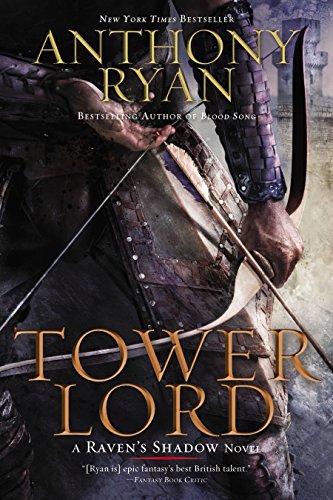
Sequel to Blood Song, Tower Lord follows the story of Vaelin Al Sorna and his fellow brothers of the Sixth Order. The first book ended with failed oversea invasion which caused the small group that was together until then to be separated, which also changed how the story is told, switching between multiple points of view: Vaelin, Princess Lyrna, Reva and Frentis ‘the climber’.

Before I get to the story itself, I think I should say that the change made the second book a bit more enjoyable to me for some reason.
Vaelin, after the end of first book, decides he had enough of war, especially as the one he fought in was forged from lies and greed. He spent five years in enemy’s prison, lost some of his friend and for the others, had no idea where they were, if they were even alive – which he does not know.

When he finally returns home, he’s sent to be Tower Lord of the Northern reaches, hoping that to be a calm time spent away from the wars, greed and lies. Continue reading

Book review: Blood song

For my latest read, I chose something more known, Anthony Ryan’s Blood Song. The book follows Vaelin Al Sorna since being left at the gates of Sixth Order as ten-years-old boy through his training and eventually through series of conflicts.

I’ll try to be unspecific to avoid spoilers and for that reason, say very little about anything that goes in second part of the book.

Continue reading

Book review: Dragon Justice

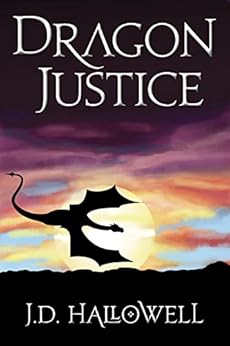
Third book of the series I am reading now, happening some time (roughly 2 years I believe) after the end of second book. While one might think that getting rid of Warrick and his schemes would bring peace, in lack of large troubles small troubles will go to the front.

This book happens in Horne, the kingdom where Warrick resided and schemed from (and that now has the Rider’s HQ in one of its remote parts). Simon and his mother, crippled by debts, are forced to serve corrupt and greedy lord Bastian and Simon himself is bullied and abused by the lord’s son, Broederick.

Simon’s situation gets slightly better when the town’s blacksmith takes Simon under his care, teaching him not only useful craft, but also the basics of self-defense, which eventually forces Broederick to look for another victim. Unable to let anyone else go through that again, he eventually intercepts him in another rape attempt and after castrating him on the spot, runs away knowing that the corrupt lords would give him little hope for fair trial.

While he manages to escape, he ends up with pretty much nothing in place usually inhabited by roracks and eventually gets to bond with a dragon hatchling in situation where he’d have trouble taking care for himself.

After weeks and months in wilderness, he eventually goes close to a town and on the way, saves a trader from the ambush of thieves, his situation getting slightly better from the reward, but as soon as he is among the people, he faces the harsh contact with reality: Bastian has put up a bounty for his return, high enough that many would be willing to die trying.

As Simon faces coming fools and enemies, the Riders eventually learn of the situation and send some of their own to help and train Simon while also sending others to protect Simon’s mother and the blacksmith from Bastian’s revenge.

Trouble only arise as Horne gets to the edge of revolt with the nobles wanting more power while the King refuses to let any go from his hands and with the roracks rampaging on the borders, it threatens to endanger more than just the greedy pride of nobility. Eventually, the Riders get everyone involved to their headquarters to force a cooperation and find a solution for the trouble, while also bringing justice to Simon’s case – no spoilers for the outcome.


Read date: 8.-13.2.2018
Goodreads / Amazon rating: 4,2 / 4,0
My rating: 85%
Length: 314 pages (kindle edition)


Truth is, I expected the end to get a bit more messy, and the problems of potential civil war spreading to more than just one kingdom. The part where Simon is on the run with his hatchling is similar to book one in some parts, while getting much tougher on him – while Delno was almost 30 with experience with war and some savings for the start of his journey, Simon leaves with just his life and what little he managed to learn in the meantime. Also, it was nice to see some old faces by the end, and Rita is still so over-protective of anyone underage, not just the three kids she adopted by the end of second book.

Fantasy thoughts: King’s closest

I was thinking a bit about what kind of people would a king (or sovereign with any other title) surround himself with, to rule the land and to achieve his own goals. That would most likely depend on personal priorities, someone bound on expanding the borders would probably have many strategists among those to listen the most.

Even in calmer times, one would probably have representatives of the army and the diplomats to take care of any trouble, or to prevent it if possible. Those interested in expansion by force would probably hire engineers to create weapons of destruction, while those that would want to build new cities would consult architects.

To deal with the everyday life of the land, I’d say that they’d need someone to relay the problems of common people because it’s always better to solve them before they get out of hand; and representatives of the nobles, who could be tempted to conspire together for a change in leadership, if they felt they are not treated as they deserve.

Of course, the ruler’s personal goals and interests would have a significant role, for which I’d borrow example from history: Rudolf II (wikipedia) of Austrian monarchy (born 1552, crowned 1572/1576, dethroned 1608, died 1612). He was a collector of arts and curiosities and supporter of alchemy and astronomy, and so he brought several experts in those fields to his closest circles.