The Seventh Knight is a fantasy story that’s… quite minimalistic when it comes to the number of characters but works quite well. Let’s have a closer look.
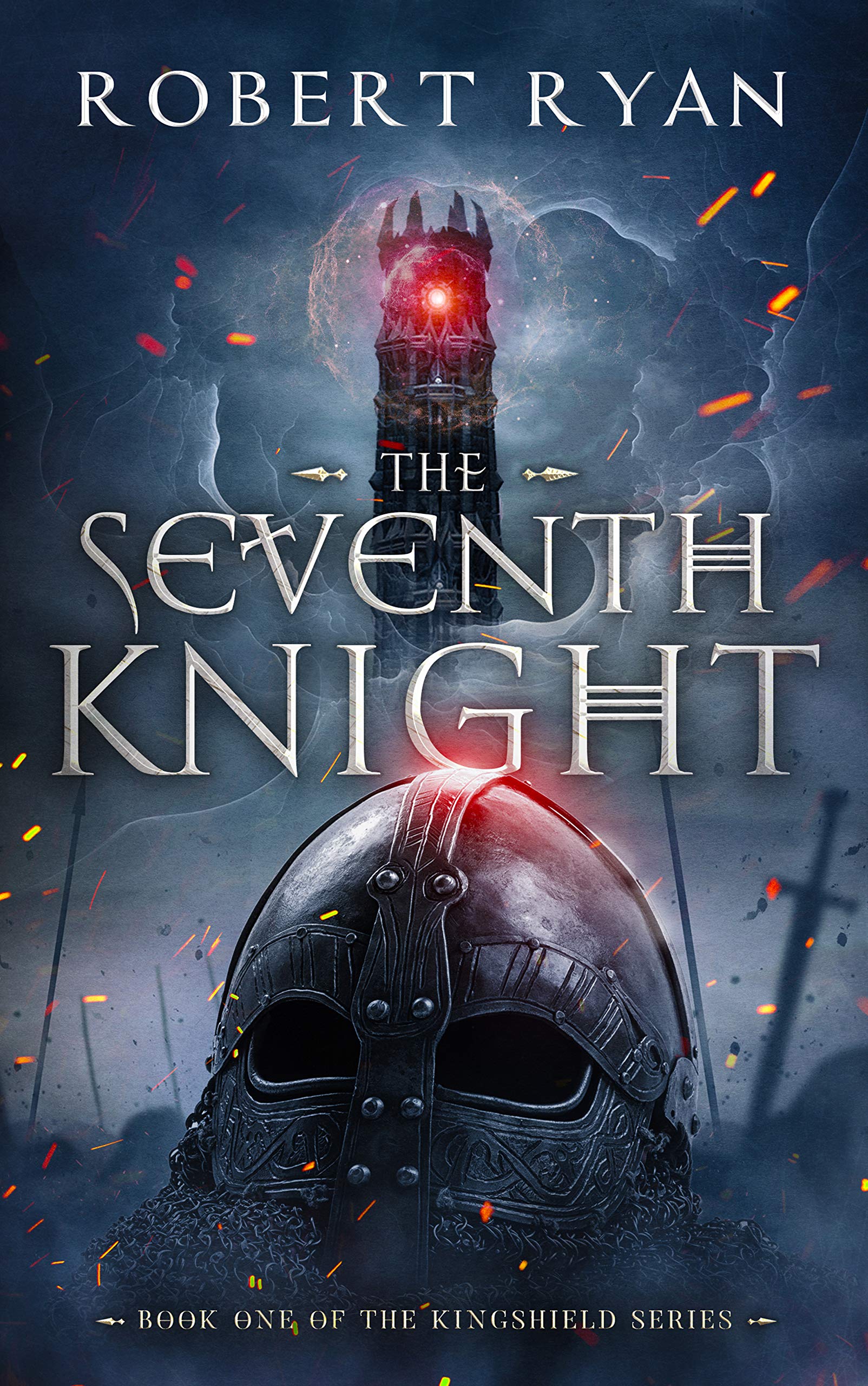
I downloaded only the sample at first, and the prologue comprised most of it. It shows backstory and worldbuilding and, compared to the total length of the book, is quite long, given that the backstory is, in fact, quite simple: the Kingshield knights – 6 of them – are to prevent a stone of dark magic from falling into the wrong hands, but as generations passed, one of the knights fell to its whispers and now the knights intended to protect the world from evil are the gateway for creatures of shadow and the bringers of doom.
The story follows Faran, a young hunter (his exact age isn’t mentioned, but I’d guess him in his 20s) who returns to his village only to find it burnt to the ground. The only other survivor is his friend Ferla. Together, they stalk away from the village, barely avoiding a group of soldiers led by one of the fallen Kingshield knights, Lindercroft, who is now coming into some magical power. They encounter a wandering healer Faran knows, but this old man is revealed to be a powerful sorcerer with lifetimes of experience and fills the role of the typical wise teacher. Later, he’s joined by one of his kin – and both keep a lot of mystery around them.
That said, given how short the book is, it doesn’t even cover the typical first act of the hero’s journey structure, as they’re mostly on the run from the enemy. Faran is tested a bit – in his resolve and courage – when Ferla is in grave danger, and he shows his archery skills, but by the end of the book, the “learning stage” typical for many such stories has yet to begin, let alone the first real confrontation.
Read date: 14.-16.6.2023
Published: 20.6.2020
Goodreads/Amazon rating: 4,04/4,3
My rating: 70%
Length: 205 pages (Kindle edition)
My highlights
It’s clear that there’s a lot of the story to be told and that this is just the beginning, but I wonder if it could’ve been three books instead of 6. By the end of this book, it feels way too much like a mere appetizer, for which I’m keeping my rating low (and keeping hope it gets better in the second book). The writing style is also a bit “old time” with flowery sentences and goes against the present trend to keep sentences short and snappy.
 Tomas - the wandering dreamer